The Kebababylon Guide to Kebabs
Kebabs are often misunderstood. They’re treated like fast food, something eaten quickly and forgotten just as fast. But slow down and look closely, and kebabs reveal themselves as one of the most honest forms of cooking there is. Food cooked close to heat, seasoned with care, and meant to be shared. It’s not complicated food, but it’s precise in a simple way, and when it’s done well you can taste that.

Across cultures and centuries, the idea stays the same. Fire, salt, spice, patience. The details change, but the fundamentals don’t.
This guide is the foundation of Kebababylon. Not a rulebook, and not a collection of shortcuts, but a clear explanation of what kebabs really are and how to approach them with confidence at home.
What is a kebab?
A kebab is best understood as a method, not a single dish. It’s food cooked directly over heat, traditionally fire or charcoal, often seasoned simply and cooked with intention. It might be skewered, shaped, shaved, or grilled on a flat surface. What ties it together is direct heat and the flavour that comes from browning.
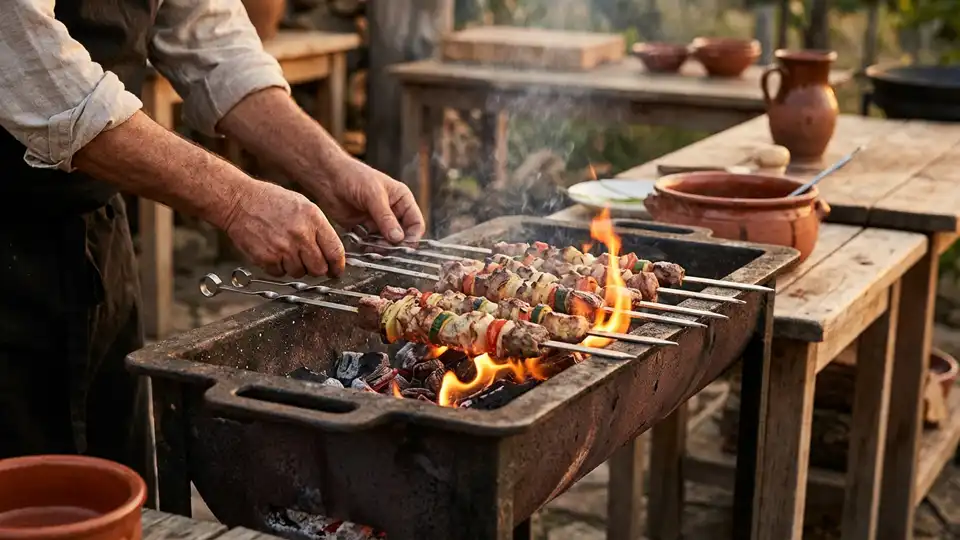
Once you see kebabs as a method, the “authenticity” panic disappears. You stop chasing one perfect style and start understanding the logic behind many.
The kebab spectrum
Kebabs tend to fall into a few broad families:
- Skewer kebabs: chunks of meat or vegetables grilled quickly and served hot and fresh.
- Minced kebabs: seasoned mince shaped onto skewers or into logs, where texture and binding matter as much as flavour.
- Doner-style kebabs: meat cooked slowly on a spit and shaved thin, built on seasoning, fat content and slow rendering.
- Vegetarian kebabs: vegetables, halloumi, tofu or plant-based options that rely on seasoning and proper heat to create depth.
Each style asks slightly different things from you, but they all share the same core skills.
The fundamentals that make kebabs great
Meat choice and fat content
Kebabs love fat. Not grease, but the fat that melts as it cooks and keeps things juicy. Too lean and you’ll get dryness, even if your seasoning is perfect.
Seasoning balance
The best kebab seasoning tastes rounded and warm. Cumin and coriander for backbone, paprika for sweetness and colour, garlic and onion for depth, black pepper for lift. Chilli should warm, not dominate. If a kebab tastes aggressive, it’s usually because the blend is unbalanced or the salt is off.
Marinades that support cooking
A marinade is a tool, not a requirement. Salt does the real work, fat carries flavour, acid brightens, and time must be controlled. Marinades help kebabs cook better, but they won’t rescue poor meat or under-seasoning.
Heat control
Browning equals flavour. Kebabs need properly hot heat so they colour quickly without drying out. Too cool and they steam. Too fierce and they burn before the inside is ready. The best cooks move kebabs between hotter and cooler spots rather than trying to power through.
Resting
Resting is the quiet step that changes everything. Even a few minutes lets juices settle and textures relax.
The supporting cast
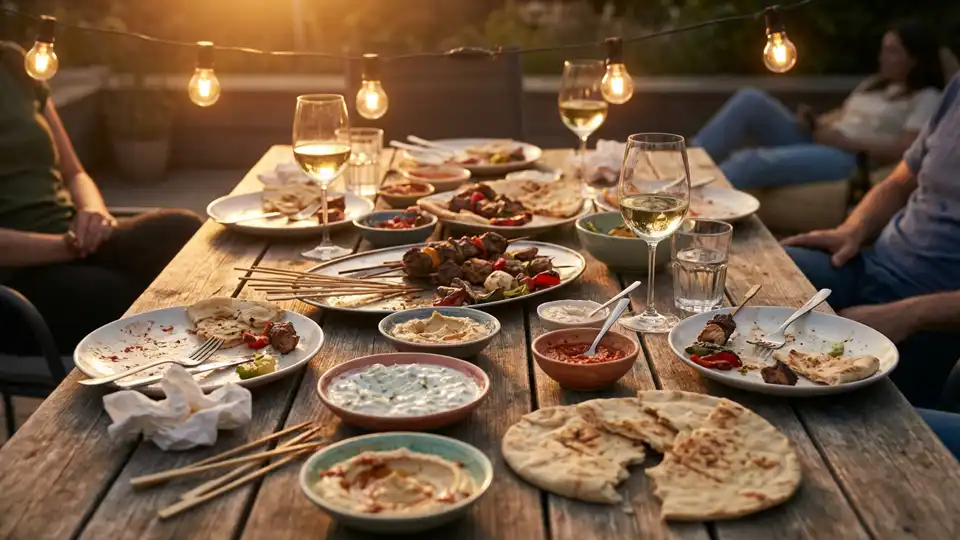
Great kebabs rarely stand alone. Flatbreads give softness and structure. Sauces add contrast, yoghurt for cooling, chilli for brightness, herbs for lift. Salads and pickles bring crunch and acidity to cut through fat. When it’s all balanced, a kebab feels complete rather than heavy.
Kebabs at home
You don’t need specialist equipment to cook great kebabs. A cast-iron pan, a grill, a barbecue, even a hot oven grill can get you most of the way there. What matters is understanding the method: dry heat, proper browning, and thoughtful seasoning.
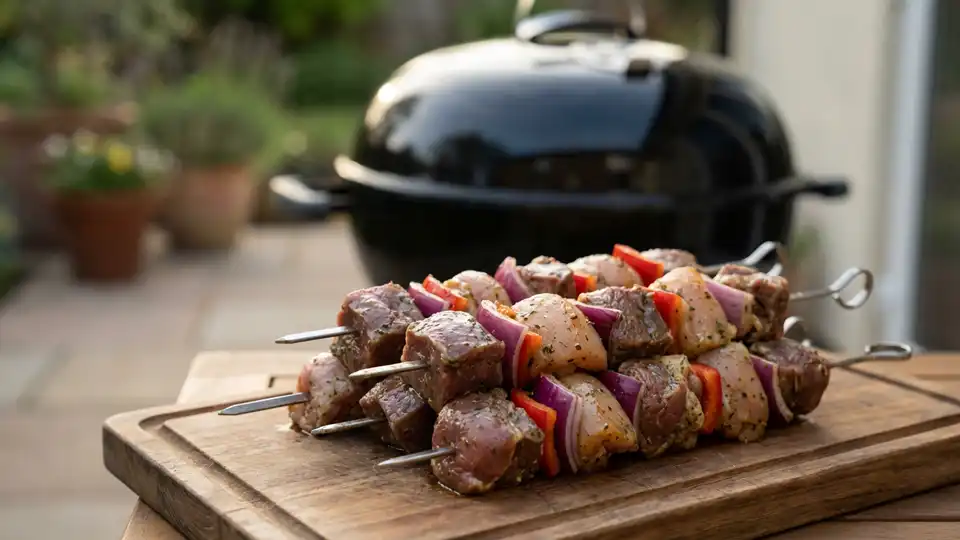
If you can cook kebabs well at home, you’ll find you can cook almost anything well. It’s one of the best skills you can build because it teaches you timing, heat, and restraint.
What actually counts as a kebab?
Food cooked directly over high heat, usually grilled, seasoned with intention. The method matters more than the format.
Are kebabs always grilled?
Many are, but some are cooked on griddles or roasted vertically. They still rely on direct heat and browning.
Do kebabs have to include meat?
No. Vegetable, halloumi, and plant-based kebabs can be excellent when seasoned and cooked properly.
What’s the biggest mistake people make with kebabs?
Overcomplicating. Too much marinade, too many spices, or fear of high heat usually leads to bland or dry results.